
Loading articles.
Loading the article.
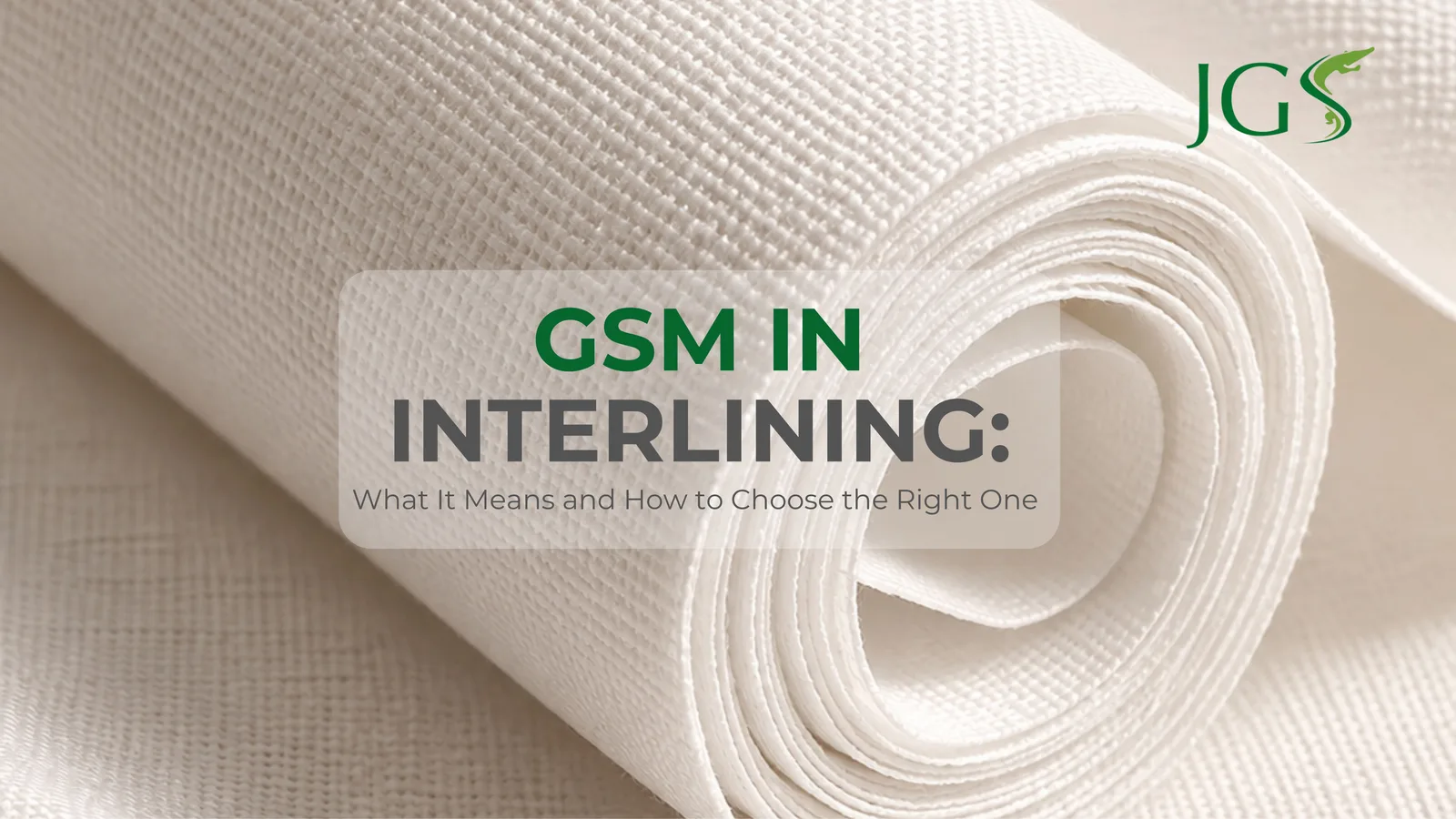
Learn what GSM means in fabric, why it matters, and how to choose the right fabric weight for garments, fusible interlining, and non-woven applications.
When choosing fabric for garments or technical applications, GSM is one of the most important factors to consider. But what is GSM in fabric, and why does it matter?
GSM stands for Grams per Square Metre. It measures the weight of one square metre of fabric and helps manufacturers and buyers compare fabric weights. However, GSM alone does not determine thickness, softness, durability or quality. These properties also depend on the fibre, weave or knit structure, and fabric finish.
Choosing the right fabric GSM helps achieve the desired balance of comfort, strength and performance. The appropriate GSM depends on how the fabric will be used.
Fabric GSM varies depending on its construction and intended use. The following ranges are approximate examples.
Fabric type
Approximate GSM
Lightweight jersey
120–160 GSM
Cotton poplin
100–150 GSM
Terry fabric
250–400 GSM
Canvas
250–450 GSM
These ranges are not fixed standards. Always check the fabric specification before selecting a material.
Fabric GSM can be checked using a GSM cutter and a digital weighing scale. A small fabric sample of a standard area is cut and weighed to determine its weight per square metre.
When checking fabric GSM, ensure the sample is measured accurately and is free from folds or irregular edges. For consistent results, use the same testing method across samples.
However, GSM should not be the only factor when selecting fabric. Consider its fibre composition, construction, thickness, strength and intended application to ensure it meets your requirements.
GSM is also important when selecting fusible interlining for garments. The right weight depends on the outer fabric, the required stiffness and the area where the interlining will be applied, such as collars, cuffs and plackets.
For non-woven fabrics, GSM helps buyers compare material weight for applications such as filtration, packaging and industrial use. However, properties such as fibre composition, bonding method, porosity and strength should also be considered.
Before selecting a fabric, consider its end use, required feel, strength, breathability and construction. For interlining and non-woven applications, review the technical specifications alongside GSM to ensure the material meets your requirements.
At JGS Tex Fab, we understand the importance of selecting suitable textile materials for different applications. Choosing the right fabric specifications can help achieve consistent performance and product quality.
Keep reading
 3 min read
Discover the role of non-woven fabric in embossing and precision cutting, from improved material stability to better production consistency.
Read the article 3 min read
Embroidery backing paper is the hidden layer that decides whether an order ships or gets stitched twice. Here’s what it is, the four main types, and how to choose the right one for your fabric.
Read the article 2 min read
Understand how OEKO-TEX certification helps garment brands meet buyer expectations, improve material safety assurance, and choose reliable interlining and non-woven fabric for quality-conscious apparel production.
Read the articleLet's Connect
Tell us the fabric, the garment and the run size. We will come back with the interlining that fits, and a sample to prove it.
Send an enquiry