
Loading articles.
Loading the article.
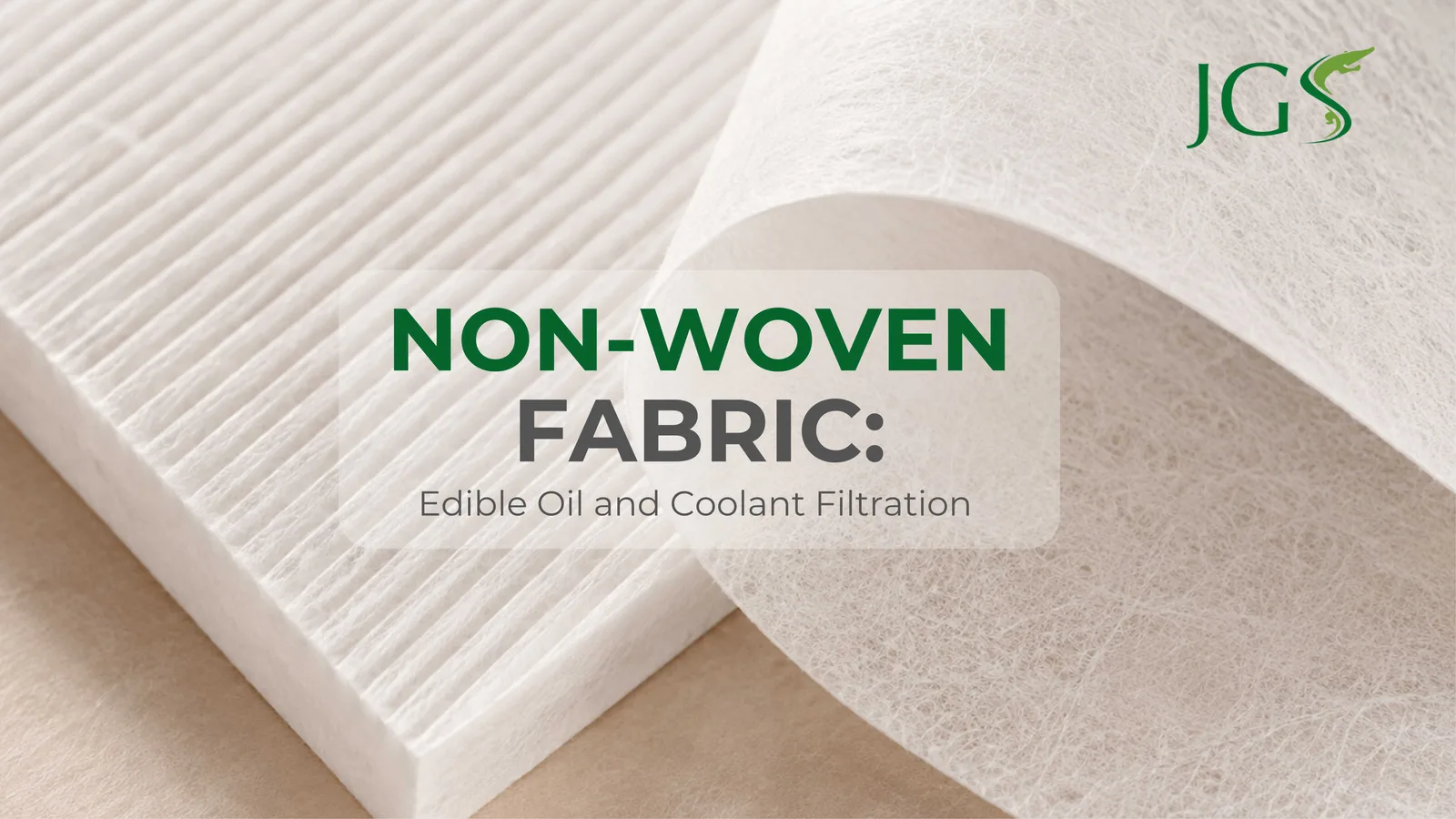
Discover how non-woven fabric supports edible oil and coolant filtration, and learn how to choose the right filter material based on strength, GSM, fluid compatibility, and filtration performance.
Filtration looks simple: liquid goes in dirty, comes out clean. In practice, the filter material decides how clean the output is, how long the system runs and how often it needs to be stopped. That is why the choice of non-woven fabric for filtration matters more than most buyers expect.
Two industries rely on it heavily: edible oil processing and metalworking (coolant filtration). The conditions are very different, but the need is the same: a filter medium that is consistent, strong and reliable.
Non-woven fabric is made by bonding fibers together instead of weaving them. This creates a uniform, porous structure that traps particles while letting liquid pass through. Chemical bond non-woven, which uses a chemical binder to hold the fibers together, is widely used for this purpose because it offers:
In edible oil processing, filtration removes solid particles and impurities so the oil looks clear and meets quality expectations. Non-woven filter material is used in:
What matters here:
In machining and metalworking, coolant circulates to cool tools and carry away metal fines and debris. If the coolant isn't filtered, those particles can damage tools, spoil surface finish and shorten coolant life. Non-woven fabric is commonly used on conveyor-type filter systems, where it catches particles and is then advanced and replaced.
What matters here:
Check these five points before you order:
Whether it is clarifying edible oil or keeping machining coolant clean, the right filter material makes the whole process more reliable. A non-woven fabric manufacturer in India that offers consistent quality, flexible specifications and sample testing can help you find the right fit before you commit to bulk supply.
Looking for non-woven fabric for filtration? Contact JGS Tex Fab for samples and technical support.
Keep reading
 3 min read
Discover the role of non-woven fabric in embossing and precision cutting, from improved material stability to better production consistency.
Read the article 3 min read
Learn what GSM means in fabric, why it matters, and how to choose the right fabric weight for garments, fusible interlining, and non-woven applications.
Read the article 3 min read
Discover how chemical bond non-woven fabric is used across apparel, leather goods, automotive, filtration, packaging, hospitality, and electrical industries, and learn how to choose the right specifications for your application.
Read the articleLet's Connect
Tell us the fabric, the garment and the run size. We will come back with the interlining that fits, and a sample to prove it.
Send an enquiry