
Loading articles.
Loading articles.
Loading the article.
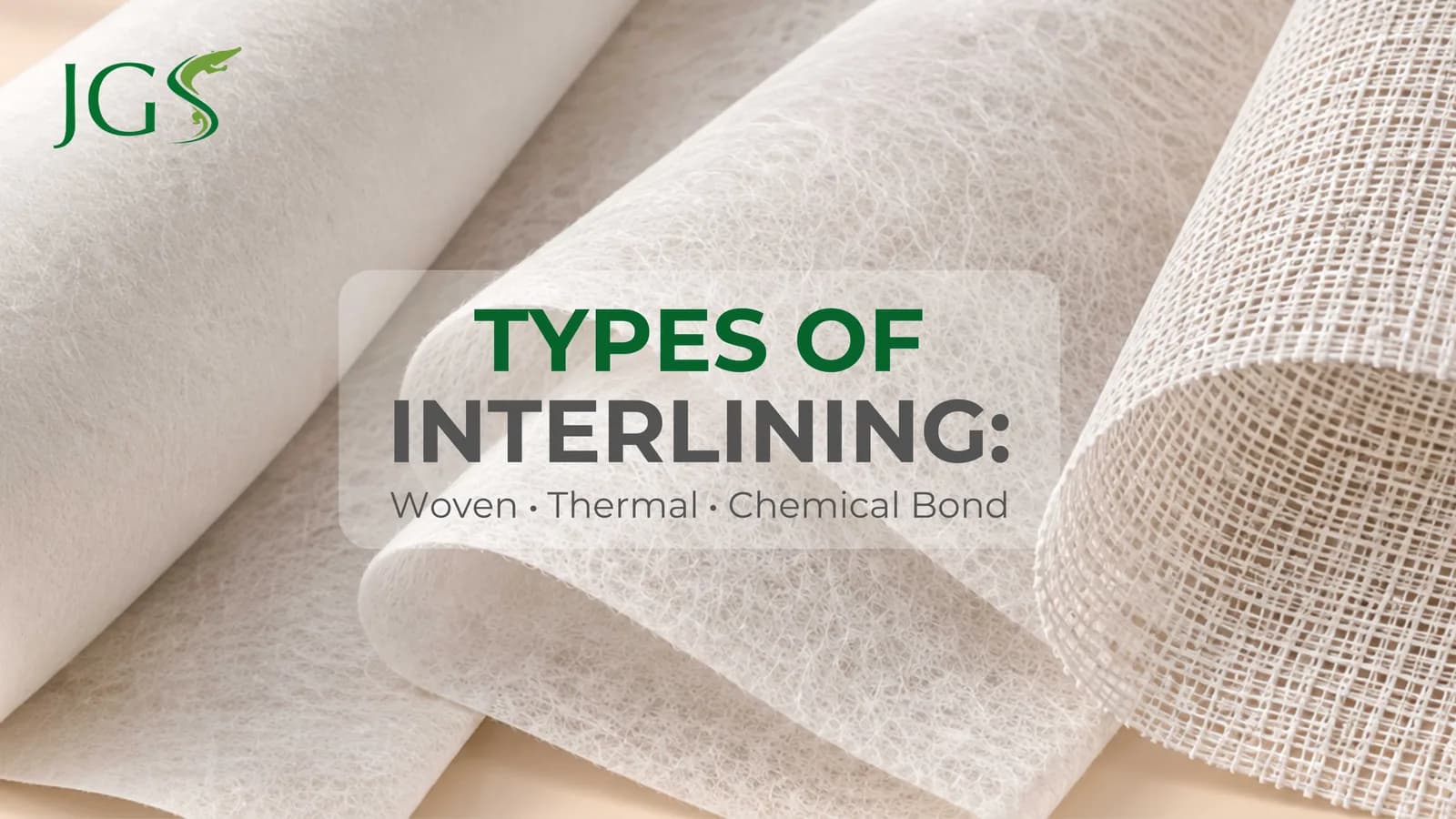
Explore the key differences between woven, thermal bond, and chemical bond interlining, their applications, and how to choose the right type for durability, performance, and cost.
Turn a shirt collar inside out and you'll find a thin layer between the outer fabric and the lining. That's the interlining, and it decides whether a collar stays crisp after fifty washes or goes limp after five.
Interlining adds structure, stability, and durability to a product. Most are fusible interlining, meaning a heat-activated adhesive bonds them to the fabric, which speeds up production and keeps results consistent. Here are the three main interlining types.
Made from woven yarns, usually as buckram or microdot in stiff, medium, or soft finishes. Woven interlining offers excellent stability and a crisp finish, so it's ideal for interlining for shirt collars and cuffs, plackets, suits, and blazers. It costs more, so it works best where structure and wash performance matter most.
Fibers are bonded with heat, often in a pestdot pattern. Thermal bond non-woven is lightweight, flexible, and cost-effective. Use it for apparel, borders and laces, knitwear lapels, pillow covers, and automotive seat covers, where support is needed without stiffness.
Fibers are held together with a chemical binder. It's the most versatile of the non-woven interlining types, used well beyond garments in leather goods, automotive headliners, filtration, packaging, and electrical cable wrapping. Because the range is so wide, choosing the right weight and finish matters.
Knowing how to choose interlining comes down to five checks:
Choosing on price alone, skipping sample testing, and ignoring shrinkage differences between fabric and interlining are the most common causes of bubbling, puckering, and rejections.
No single interlining type is best for everything. Woven gives premium structure, thermal bond gives light economy, and chemical bond gives flexibility across industries. Work with a non-woven fabric manufacturer that offers sample testing and fusing support, and you'll find the right match faster.
Need help choosing the right interlining for your fabric or product? Contact JGS Tex Fab for a consultation.
Let's Connect
Tell us the fabric, the garment and the run size. We will come back with the interlining that fits, and a sample to prove it.
Send an enquiry